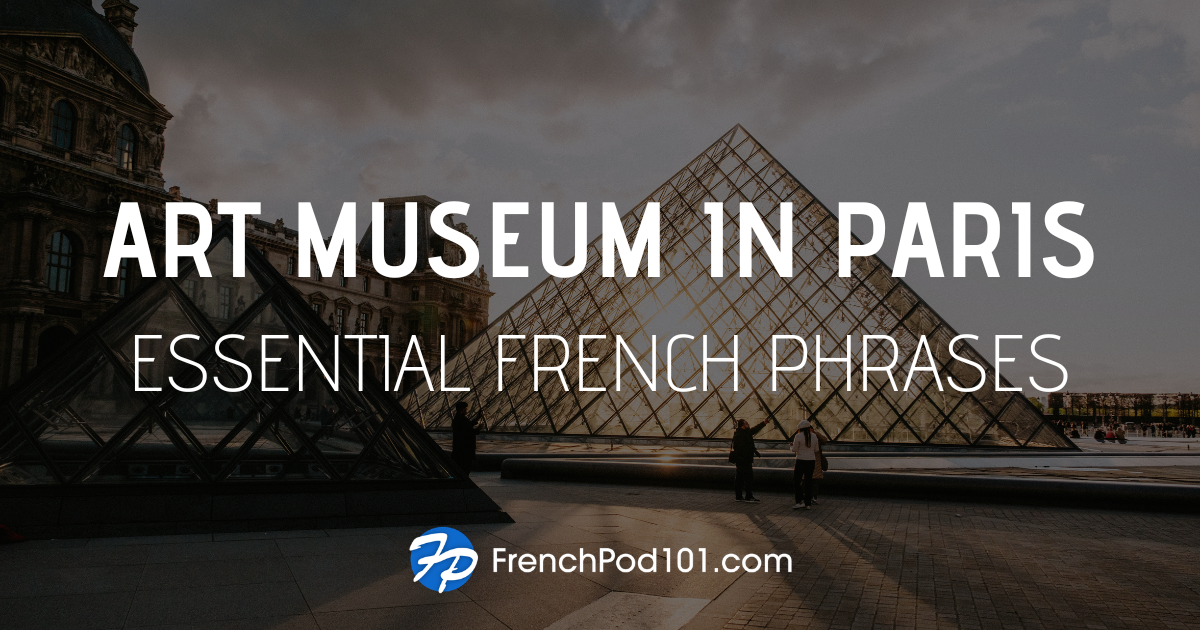
Stepping into a Parisian art museum like the Louvre or the Musée d’Orsay is an unforgettable experience. But for a language learner, it can also feel a little intimidating. How do you buy a ticket? Ask where the Mona Lisa is? Or understand what the signs are telling you?
Don’t worry—you don’t need to be fluent to have a smooth and enriching visit. This practical guide is packed with the essential French museum vocabulary and phrases you’ll need. We’ll walk you through every step, from the ticket counter to the exhibition halls, so you can focus on the incredible art around you.
Table of Contents
Essential Greetings and Polite Phrases at a Museum
Before you ask for anything in France, it’s customary to start with a polite greeting. Simply saying Bonjour before your question is a natural way to begin an interaction with a stranger and show respect.
Here’s a quick cheat sheet you can screenshot for your visit:
- To start an interaction: Bonjour, Monsieur. (“Hello, sir.”) / Bonjour, Madame. (“Hello, ma’am.”)
- To get someone’s attention: Excusez-moi. / Pardon. (“Excuse me.”)
- To be polite: S’il vous plaît. (“Please.”)
- To say thanks: Merci beaucoup. (“Thank you very much.”)
- To say goodbye: Bonne journée. (“Have a nice day.”)
Let’s see it in action. Anna and Leo are at the museum entrance, and Anna needs to ask an employee a question.
Anna: Bonjour, Madame. Excusez-moi, où est la billetterie, s’il vous plaît? (“Hello, ma’am. Excuse me, where is the ticket office, please?”)
Museum Employee: Bonjour. C’est tout droit, à gauche. (“Hello. It’s straight ahead, on the left.”)
Anna: Merci beaucoup! Bonne journée.
Notice how Anna begins with Bonjour before asking her question. It’s a small habit that can make interactions feel more natural. For more practice with basic expressions, see Useful Phrases for Learning French on FrenchPod101.com.
Buying Tickets and Asking About Prices
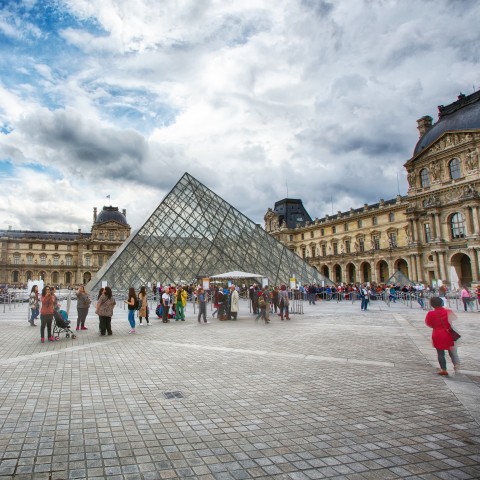
You’ve found the billetterie (“ticket office”). Now it’s time to buy your admission. At a staffed ticket counter, these phrases will get you what you need, and you’ll recognize much of the same vocabulary at a self-service kiosk.
- To ask for tickets:
- Un billet, s’il vous plaît. (“One ticket, please.”)
- Deux billets, s’il vous plaît. (“Two tickets, please.”)
- To ask about the price:
- C’est combien? (“How much is it?”)
- Combien coûte le billet? (“How much does the ticket cost?”)
- To ask about discounts:
- Est-ce qu’il y a un tarif étudiant? (“Is there a student rate?”)
- Y a-t-il un tarif réduit? (“Is there a reduced rate?”)
- To ask about payment:
- Je peux payer par carte? (“Can I pay by card?”)
Here’s Leo at the ticket counter while Anna looks at the museum map.
Leo: Bonjour, Monsieur.
Ticket Agent: Bonjour. Je vous écoute. (“Hello. How can I help you?”)
Leo: Deux billets, s’il vous plaît. C’est combien?
Ticket Agent: Cinquante euros, s’il vous plaît. (“Fifty euros, please.”)
Leo: D’accord. Je peux payer par carte?
Ticket Agent: Oui, bien sûr. (“Yes, of course.”)
Asking About Audio Guides and Guided Tours
Many Parisian museums offer audio guides in multiple languages or guided tours that can add more context to your visit. Here’s how to ask about them:
- Est-ce qu’il y a un audioguide en anglais? (“Is there an audio guide in English?”)
- Où puis-je prendre un audioguide? (“Where can I get an audio guide?”)
- À quelle heure commence la visite guidée? (“What time does the guided tour start?”)
- Combien de temps dure la visite? (“How long does the tour last?”)
Anna decides she wants to learn more about the exhibits.
Anna: Pardon, Madame. Est-ce qu’il y a des audioguides en anglais?
Museum Employee: Oui. Vous pouvez les prendre au bureau d’information, là-bas. (“Yes. You can get them at the information desk, over there.”)
Anna: Super, merci beaucoup!
Finding Exhibits, Rooms, and Museum Facilities
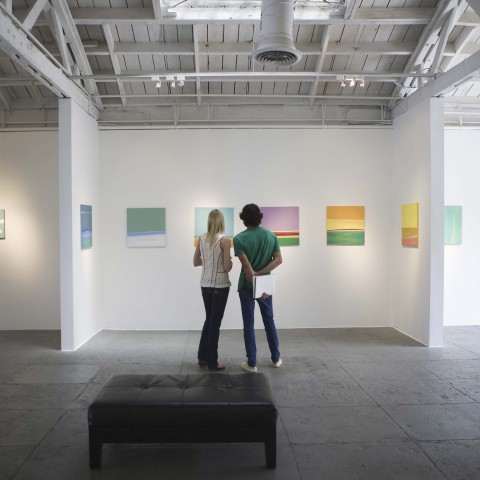
Some of Paris’s major museums are enormous, so knowing how to ask for directions to a gallery or even just the restroom is especially useful.
Finding Your Way
- To find an exhibit:
- Où est la salle des impressionnistes? (“Where is the Impressionist gallery?”)
- Où se trouve l’exposition sur l’Égypte ancienne? (“Where is the exhibit on ancient Egypt?”)
- To ask the way:
- C’est par où, s’il vous plaît? (“Which way is it, please?”)
- À quel étage? (“Which floor?”)
Finding Facilities
- Où sont les toilettes? (“Where are the restrooms?”)
- Où est le vestiaire? (“Where is the cloakroom?”)
- Où est la sortie? (“Where is the exit?”)
Understanding Directions
- Au rez-de-chaussée. (“On the ground floor.” In US English, this is the first floor.)
- Au premier étage. (“On the first floor above ground level.” In US English, this is the second floor.)
- Au deuxième étage. (“On the second floor above ground level.” In US English, this is the third floor.)
- À droite. (“On the right.”)
- À gauche. (“On the left.”)
- Tout droit. (“Straight ahead.”)
Travel tip: Floor numbering in France differs from the usual US system. The rez-de-chaussée is at street level, and the premier étage is the floor above it.
Let’s follow Leo as he tries to find the Italian Renaissance collection.
Leo: Excusez-moi, Monsieur. Je cherche les peintures italiennes.
Museum Guard: Ah, elles sont au premier étage. Prenez l’escalier à droite, puis c’est la deuxième galerie sur votre gauche. (“Ah, they’re on the floor above the ground floor. Take the stairs on the right, then it’s the second gallery on your left.”)
Leo: Merci bien.
Learning this kind of museum vocabulary in French will make your navigation much less stressful.
Understanding Museum Rules
To be a respectful visitor, you need to follow the museum’s rules. You’ll often see signs, but sometimes you may need to ask for clarification.
Common Signs and Instructions
- Ne touchez pas aux œuvres. (“Do not touch the artworks.”)
- Photos interdites. (“No photography.”)
- Photos sans flash autorisées. (“Photography without flash is allowed.”)
- Silence, s’il vous plaît. (“Quiet, please.”)
- Les sacs doivent être déposés au vestiaire. (“Bags must be left at the cloakroom.”)
Asking for Clarification
- Est-ce qu’on peut prendre des photos? (“Can we take photos?”)
- Est-ce que le flash est autorisé? (“Is flash photography allowed?”)
And here’s how to respond when an employee clarifies a rule for you:
- D’accord. (“Okay.”)
- Je comprends. (“I understand.”)
Anna sees a beautiful sculpture and wants a picture for her travel blog.
Anna: Excusez-moi, Monsieur. Est-ce qu’on peut prendre des photos ici?
Museum Guard: Oui, mais sans flash, s’il vous plaît. (“Yes, but without flash, please.”)
Anna: D’accord, merci. Sans flash.
Talking About the Art: Simple Questions and Reactions
You’re not just here for logistics; you’re here for the art! Having a few phrases to talk about what you’re seeing can make the experience more interactive and fun, especially if you’re with a friend.
Asking About an Artwork
- Qui a peint ce tableau? (“Who painted this painting?”)
- De quelle époque date cette œuvre? (“What period is this work from?”)
- Quel est le titre de cette œuvre? (“What is the title of this work?”)
- Qu’est-ce que c’est? (“What is it?”)
Sharing Your Reactions
- C’est magnifique! (“It’s magnificent!”)
- C’est impressionnant. (“It’s impressive.”)
- C’est intéressant. (“It’s interesting.”)
- C’est étrange. (“It’s strange.”)
If you want to ask a museum guide for more information, you can say:
- Pouvez-vous m’en dire plus? (“Can you tell me more about it?”)
Standing in front of a massive painting, Anna and Leo share their thoughts.
Anna: Waouh, regarde ça! C’est magnifique!
Leo: C’est impressionnant, c’est sûr. De quelle époque ça date, tu penses? (“It’s impressive, for sure. What period do you think it’s from?”)
Anna: Je ne sais pas. Qui a peint ce tableau? Allons voir le panneau. (“I don’t know. Who painted this painting? Let’s go look at the information panel.”)
If you’re interested in Impressionist and Post-Impressionist art, you can also explore FrenchPod101’s feature on the Musée d’Orsay.
A Quick Note on Museum Etiquette in Paris
A couple of cultural norms are especially useful to remember because they affect how you speak to museum staff:
- Greet First: In France, it’s customary to begin an interaction with Bonjour, Madame/Monsieur before asking your question.
- Use Vous: Use the formal vous form when speaking to museum staff. Tu would generally be too informal in this situation.
Recap: You’re Ready for Your Museum Visit
You now have everything you need to navigate a visit to a Parisian art museum from start to finish: buying your billet at the counter, asking a guard for directions to a gallery or the toilettes, understanding the rules about photos and touching the art, and even asking Qui a peint ce tableau? when something catches your eye. With these phrases and a little confidence, you’re more than ready to explore the incredible art scene in Paris.
Want to practice a museum conversation before your trip? Continue with A Museum Visit on FrenchPod101.com. Bonne visite!