
Moving to France is exciting, but everyday life quickly teaches you that textbook French and real-life French are not always the same thing.
Ordering at a café or introducing yourself is one thing. Explaining that you’ve lost your passport, describing symptoms to a doctor, or asking why your train has been cancelled is something else entirely. These situations often happen unexpectedly, and staff may speak quickly or use vocabulary you have not practiced before.
The good news is that you do not need perfect French to handle everyday situations more confidently. Many interactions follow familiar patterns, and learning a few useful phrases in advance can make it much easier to understand what is happening and respond appropriately.
In this guide, you’ll learn 42 practical French phrases across six situations that residents and long-term visitors commonly face: the post office, hospitals and medical appointments, customer service, police, emergencies, and transportation problems. Each section includes natural French, English meanings, a short dialogue, and useful vocabulary.
Table of Contents
What French Phrases Do You Need for Daily Life in France?
If you’re living in France, or planning to move there, you do not need to memorize thousands of words before you can function confidently. It is more useful to learn phrases for the situations you are actually likely to encounter.
This guide focuses on:
- Sending letters and packages at the post office
- Visiting a doctor, clinic, or hospital
- Calling customer service
- Speaking with the police or gendarmerie
- Handling emergencies
- Solving transportation problems
For a broader guide covering immigration, administration, banking, housing, utilities, shopping, and more, see The Ultimate French Guide for Living in France: 160+ Essential Phrases for Visa, Immigration, Moving & Daily Life.
At the Post Office: Sending Packages, Registered Mail, and Tracking Deliveries

Whether you’re mailing documents, sending a package abroad, buying stamps, or using registered mail, you’ll probably need La Poste at some point while living in France.
For extra practice, the FrenchPod101 Going Out in France: Level 1 pathway includes lessons specifically about the French post office and sending packages.
Common Situations
You may visit the post office to:
- Send a domestic package
- Send a parcel internationally
- Buy stamps
- Send registered mail
- Ask for tracking
- Ask about delivery times
Essential French Phrases
| French | English |
|---|---|
| Je voudrais envoyer un colis. | “I’d like to send a package.” |
| C’est pour l’étranger. | “It’s for abroad.” |
| Combien coûte l’envoi de ce colis ? | “How much does it cost to send this package?” |
| Est-ce que je peux suivre l’envoi ? | “Can I track the shipment?” |
| Je voudrais acheter des timbres. | “I’d like to buy some stamps.” |
| Je voudrais l’envoyer en recommandé. | “I’d like to send it by registered mail.” |
| Combien de temps faut-il environ ? | “About how long will it take?” |
Sample Dialogue
Customer
Bonjour. Je voudrais envoyer ce colis au Canada.
“Hello. I’d like to send this package to Canada.”
Clerk
Vous voulez un envoi avec suivi ?
“Would you like tracked shipping?”
Customer
Oui, s’il vous plaît. Combien de temps faut-il environ ?
“Yes, please. About how long will it take?”
Clerk
Je vais vérifier selon le service choisi.
“I’ll check based on the service you choose.”
Useful Vocabulary
| French | English |
|---|---|
| la poste / le bureau de poste | “post office” |
| un colis | “package / parcel” |
| un timbre | “stamp” |
| l’affranchissement | “postage” |
| le suivi | “tracking” |
| un envoi recommandé | “registered mail” |
| un accusé de réception | “acknowledgment of receipt” |
For official information about international mail and tracking options, see La Poste’s guidance on sending mail internationally.
Visiting a Doctor, Clinic, or Hospital

Nobody plans to get sick, but learning a few medical phrases before you need them can make an appointment much less stressful. In France, you may visit a doctor’s office, a medical center, a clinic, or a hospital depending on the situation.
FrenchPod101’s Do You Need a Doctor in France? lesson provides extra practice with medical French.
If you are enrolled in the French health insurance system and have a Carte Vitale, you may be asked for it at a medical appointment or pharmacy.
Common Situations
At a medical appointment, you may need to:
- Say that it is your first visit
- Present your Carte Vitale
- Describe your symptoms
- Explain where you have pain
- Ask whether someone speaks English
- Find a pharmacy after your appointment
Essential French Phrases
| French | English |
|---|---|
| C’est la première fois que je viens ici. | “This is my first visit here.” |
| Voici ma carte Vitale. | “Here’s my Carte Vitale.” |
| J’ai de la fièvre. | “I have a fever.” |
| J’ai mal à la tête. | “I have a headache.” |
| J’ai mal au ventre. | “I have a stomachache.” |
| Est-ce qu’il y a quelqu’un qui parle anglais ? | “Is there anyone who speaks English?” |
| Où est la pharmacie la plus proche ? | “Where is the nearest pharmacy?” |
Sample Dialogue
Receptionist
Bonjour. C’est votre première consultation ici ?
“Hello. Is this your first appointment here?”
Patient
Oui. C’est la première fois que je viens ici.
“Yes. This is my first visit here.”
Receptionist
Vous avez votre carte Vitale ?
“Do you have your Carte Vitale?”
Patient
Oui, voici ma carte Vitale.
“Yes, here’s my Carte Vitale.”
Useful Vocabulary
| French | English |
|---|---|
| un médecin | “doctor” |
| un cabinet médical | “doctor’s office / medical practice” |
| un hôpital | “hospital” |
| une infirmière / un infirmier | “nurse” |
| un symptôme | “symptom” |
| une ordonnance | “prescription” |
| une pharmacie | “pharmacy” |
| la carte Vitale | “French health insurance card” |
Helpful Phrases When You Don’t Understand
Pouvez-vous répéter, s’il vous plaît ?
“Could you repeat that, please?”
Pouvez-vous parler un peu plus lentement ?
“Could you speak a little more slowly?”
For official information about eligibility and applying for a Carte Vitale, see Assurance Maladie’s Carte Vitale guidance.
Calling Customer Service
Calling an internet provider, phone company, bank, utility company, insurer, or another service provider can feel intimidating if French is not your first language.
The good news is that these calls are usually structured. You may be asked for your customer number, address, or other account information before the representative can help.
The FrenchPod101 Using a Phone in France pathway is a useful place to practice phone conversations.
Common Situations
You may need to contact customer service to:
- Report a service problem
- Ask about your account
- Change your address
- Modify a contract or subscription
- Ask about a bill
- Request technical support
Essential French Phrases
| French | English |
|---|---|
| J’ai un problème avec mon abonnement. | “I have a problem with my subscription.” |
| Ma connexion Internet ne fonctionne plus. | “My internet connection isn’t working anymore.” |
| Je voudrais modifier mon contrat. | “I’d like to change my contract.” |
| Je voudrais changer mon adresse. | “I’d like to change my address.” |
| Pouvez-vous me l’expliquer à nouveau ? | “Could you explain that to me again?” |
| Pouvez-vous parler un peu plus lentement ? | “Could you speak a little more slowly?” |
| Je voudrais parler à un conseiller, s’il vous plaît. | “I’d like to speak to an advisor, please.” |
Sample Dialogue
Representative
Service client, bonjour. Que puis-je faire pour vous ?
“Customer service, hello. How can I help you?”
Customer
Bonjour. Ma connexion Internet ne fonctionne plus.
“Hello. My internet connection isn’t working anymore.”
Representative
Je vais vérifier votre dossier. Pouvez-vous me donner votre numéro de client ?
“I’ll check your account. Could you give me your customer number?”
Customer
Oui, un instant, s’il vous plaît.
“Yes, one moment, please.”
Useful Vocabulary
| French | English |
|---|---|
| un abonnement | “subscription / plan” |
| un contrat | “contract” |
| une facture | “bill / invoice” |
| une panne | “breakdown / outage” |
| le service client | “customer service” |
| un conseiller / une conseillère | “advisor / representative” |
| un numéro de client | “customer number” |
| une résiliation | “cancellation / termination” |
Going to the Police or Gendarmerie
Hopefully, you will not often need police assistance, but it is useful to know what to say if you lose important documents, have something stolen, need to file a complaint, or need urgent help.
In France, you may deal with either the police or the gendarmerie depending on where you are.
For emergency-language practice, FrenchPod101’s Asking for Help in French lesson covers essential ways to ask for help.
Common Situations
You may need the police or gendarmerie to:
- Report a stolen item
- Explain that you lost important documents
- File a complaint
- Ask where to report a loss
- Ask for immediate help
- Ask whether someone speaks English
Essential French Phrases
| French | English |
|---|---|
| J’ai perdu mon portefeuille. | “I lost my wallet.” |
| J’ai perdu mon passeport. | “I lost my passport.” |
| On m’a volé mon vélo. | “My bicycle was stolen.” |
| Je voudrais porter plainte. | “I’d like to file a complaint.” |
| Pouvez-vous m’aider, s’il vous plaît ? | “Can you help me, please?” |
| Est-ce que quelqu’un parle anglais ? | “Does anyone speak English?” |
| Où dois-je déclarer la perte de mon passeport ? | “Where do I need to report the loss of my passport?” |
Sample Dialogue
Police Officer
Bonjour. Que s’est-il passé ?
“Hello. What happened?”
Resident
On m’a volé mon vélo. Je voudrais porter plainte.
“My bicycle was stolen. I’d like to file a complaint.”
Police Officer
Vous savez quand et où le vol a eu lieu ?
“Do you know when and where the theft happened?”
Resident
Oui. C’était devant la gare hier soir.
“Yes. It was in front of the station yesterday evening.”
Useful Vocabulary
| French | English |
|---|---|
| la police | “police” |
| la gendarmerie | “gendarmerie” |
| un commissariat | “police station” |
| une brigade de gendarmerie | “gendarmerie station / brigade” |
| un vol | “theft” |
| une plainte | “complaint / police report” |
| un portefeuille | “wallet” |
| une pièce d’identité | “identity document” |
Survival Tip
When you’re stressed, start with one clear sentence:
J’ai perdu mon passeport.
“I lost my passport.”
On m’a volé mon téléphone.
“My phone was stolen.”
Pouvez-vous m’aider, s’il vous plaît ?
“Can you help me, please?”
Once the officer understands the situation, they can guide the conversation with follow-up questions.
For urgent police or gendarmerie assistance, see Service-Public’s official police emergency guidance.
Emergency Situations
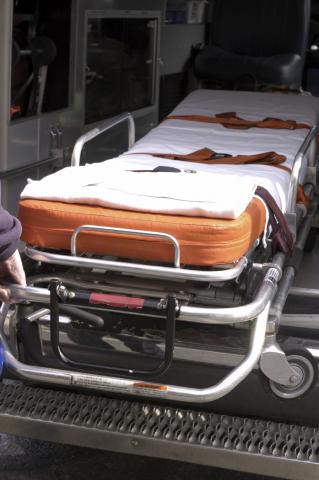
Emergencies are stressful in any language. Whether you need urgent medical help, witness an accident, or discover a fire, clear communication matters much more than perfect grammar.
In France, the main emergency numbers include:
- 15 = SAMU / urgent medical assistance
- 17 = Police or gendarmerie
- 18 = Fire brigade
- 112 = European emergency number
These numbers are for situations where urgent assistance is needed.
FrenchPod101’s 10 Phrases to Help You in an Emergency is useful for practicing emergency language before you need it.
Common Situations
You may need French if you:
- Need an ambulance
- Need urgent medical assistance
- Witness an accident
- Report a fire
- Need the police
- Need to explain your location
Essential French Phrases
| French | English |
|---|---|
| Au secours ! | “Help!” |
| J’ai besoin d’une ambulance. | “I need an ambulance.” |
| Il y a un incendie. | “There’s a fire.” |
| Il y a eu un accident. | “There’s been an accident.” |
| Je n’arrive pas à respirer. | “I can’t breathe.” |
| Appelez la police, s’il vous plaît. | “Call the police, please.” |
| Nous sommes devant la gare. | “We’re in front of the station.” |
Sample Dialogue
Emergency Operator
SAMU, bonjour. Quelle est votre urgence ?
“SAMU, hello. What is your emergency?”
Caller
Il y a eu un accident. J’ai besoin d’une ambulance.
“There’s been an accident. I need an ambulance.”
Operator
Quelle est votre adresse ?
“What is your address?”
Caller
Nous sommes devant la gare.
“We’re in front of the station.”
Useful Vocabulary
| French | English |
|---|---|
| une ambulance | “ambulance” |
| les pompiers | “fire brigade / firefighters” |
| un incendie | “fire” |
| un accident | “accident” |
| une blessure | “injury” |
| une urgence | “emergency” |
| le SAMU | “emergency medical service” |
If You Don’t Know Your Exact Location
Tell the operator the nearest:
- Train or metro station
- Shop or café
- Intersection
- Building
- Landmark
For the full list of official emergency numbers and when to use them, see Service-Public’s emergency-number guide.
Transportation Problems

France has extensive local and national public transportation, but delays, cancellations, missed connections, ticket problems, and service disruptions can still happen.
For a detailed guide to tickets, stations, buses, metros, and trains, see Using Public Transit in France Like a Local.
Common Situations
You may need help when:
- Your train is delayed
- Your train is cancelled
- You need to find the correct platform or track
- You need to confirm a destination
- You miss a connection
- You need another ticket
Essential French Phrases
| French | English |
|---|---|
| Le train a du retard ? | “Is the train delayed?” |
| Mon train est annulé. | “My train is cancelled.” |
| Ce train va à Lyon ? | “Does this train go to Lyon?” |
| C’est quel quai ? | “Which platform is it?” |
| C’est quelle voie ? | “Which track is it?” |
| J’ai raté ma correspondance. | “I missed my connection.” |
| Où est-ce que je peux acheter un autre billet ? | “Where can I buy another ticket?” |
Sample Dialogue
Passenger
Excusez-moi. Mon train est annulé. Quel est le prochain train pour Lyon ?
“Excuse me. My train is cancelled. What is the next train to Lyon?”
Staff Member
Il y en a un à 16 h 20, voie 7.
“There’s one at 4:20 p.m., track 7.”
Passenger
Merci. Est-ce que je dois changer mon billet ?
“Thank you. Do I need to change my ticket?”
Staff Member
Oui, passez au guichet, s’il vous plaît.
“Yes, please go to the ticket counter.”
Useful Vocabulary
| French | English |
|---|---|
| un train | “train” |
| une gare | “train station” |
| un quai | “platform” |
| une voie | “track” |
| un billet | “ticket” |
| un retard | “delay” |
| une correspondance | “connection / transfer” |
| annulé | “cancelled” |
Essential French Cheat Sheet for Everyday Life
Need a quick refresher before heading out? Save this table to your phone or bookmark the page.
| Situation | French | English |
|---|---|---|
| Post Office | Je voudrais envoyer un colis. | “I’d like to send a package.” |
| Post Office | Je voudrais l’envoyer en recommandé. | “I’d like to send it by registered mail.” |
| Medical | J’ai de la fièvre. | “I have a fever.” |
| Medical | J’ai mal à la tête. | “I have a headache.” |
| Customer Service | Ma connexion Internet ne fonctionne plus. | “My internet connection isn’t working anymore.” |
| Customer Service | Pouvez-vous parler un peu plus lentement ? | “Could you speak a little more slowly?” |
| Police | Je voudrais porter plainte. | “I’d like to file a complaint.” |
| Police | Pouvez-vous m’aider, s’il vous plaît ? | “Can you help me, please?” |
| Emergency | J’ai besoin d’une ambulance. | “I need an ambulance.” |
| Emergency | Appelez la police, s’il vous plaît. | “Call the police, please.” |
| Transportation | Mon train est annulé. | “My train is cancelled.” |
| Transportation | J’ai raté ma correspondance. | “I missed my connection.” |
How to Practice These Situations Before You Need Them
The best time to learn practical French is before you urgently need it.
Focus on Situations You’ll Actually Experience
Practice conversations you are likely to encounter as someone living in France:
- Asking for help
- Describing symptoms
- Sending packages
- Reporting stolen or lost items
- Dealing with transport disruptions
- Making phone calls
- Talking with customer service
Learn Through Complete Dialogues
Studying complete conversations helps you learn more than isolated words. Dialogues show you:
- Natural pronunciation
- Common sentence patterns
- Polite expressions
- Expected responses
- Vocabulary in context
- Conversational rhythm
Over time, you can start recognizing entire chunks of French instead of translating word by word.
A Simple Listening Practice Routine
- Listen once without reading.
- Read the transcript.
- Listen again.
- Repeat each sentence aloud.
- Role-play both speakers.
- Review the dialogue again a few days later.
Practice Real-Life French with FrenchPod101
The best way to prepare for life in France is to practice the conversations you are most likely to have.
FrenchPod101 includes dialogue-based lessons, vocabulary practice, listening exercises, transcripts, and other resources for everyday communication. You can start with the Absolute Beginner French Lesson Library and move into more situation-specific material as your French improves.
Whether you are preparing before your move or already living in France, regular listening and speaking practice can make these situations feel much more familiar.
When you’re ready to keep building practical French through dialogues, vocabulary, and listening practice, start learning real-life French with FrenchPod101.
Frequently Asked Questions
Can I live in France without speaking French?
It is possible to manage some situations with limited French, particularly when English-speaking help is available. However, even a small amount of practical French can make medical appointments, transportation, customer service, and unexpected problems much easier to handle.
What level of French do I need to live comfortably in France?
There is no single CEFR or DELF level that guarantees comfortable daily life. Real-life communication depends on listening speed, vocabulary, confidence, and the situations you encounter.
Even beginners can make daily life easier by learning practical phrases for the situations they face most often.
Do doctors and hospital staff in France speak English?
Some medical professionals speak English, especially in larger cities or international areas, but availability varies by facility and individual staff member. It is useful to know a few basic medical phrases and how to ask whether someone speaks English.
Should I use tu or vous in these situations?
Use vous when speaking to staff, medical professionals, police officers, customer-service representatives, or people you do not know unless they explicitly invite you to use tu. It is the safest and most natural default in these situations.
Final Thoughts
Living in France does not require perfect French. What matters is being able to communicate when you need help.
Whether you are sending a package, seeing a doctor, reporting a theft, calling customer service, handling an emergency, or dealing with a cancelled train, a few practical phrases can give you a clear way to begin the conversation.
Start with one situation. Practice a few phrases. Listen to a short dialogue. Then build from there. With repeated exposure, conversations that once felt intimidating can become much more manageable.
We’d Love to Hear From You
Which of these six situations would make you the most nervous in French?
- Visiting a doctor or hospital
- Going to the post office
- Talking to the police
- Calling customer service
- Handling an emergency
- Asking for help at a train station
Leave a comment below and let us know. We’ll recommend lessons and resources to help you feel more confident in that situation.